
Permanent archive copy
Originally published by Pixel Addict on 12 January 2022. Preserved here by the author for long-term access.
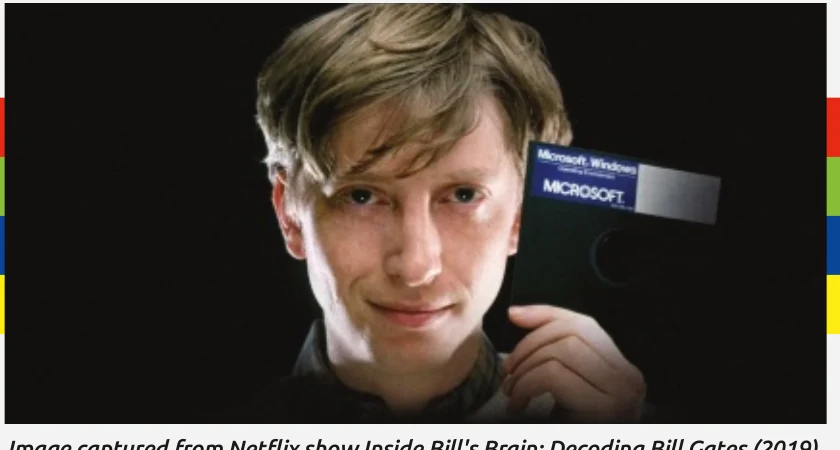
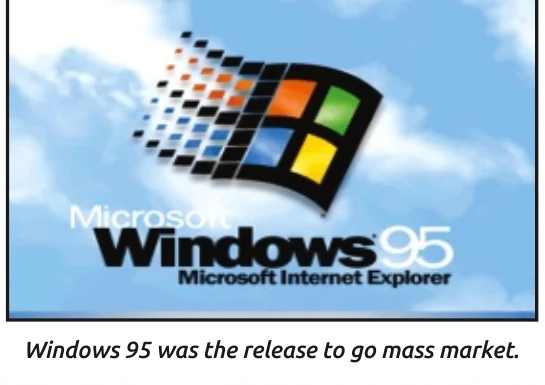
Way back in May 1995 I found myself on a press trip to Seattle. Microsoft had flown me over to the then grunge music capital of the world to see Windows 95 a few months ahead of its global launch. When I landed I was fresh-faced on my first press trip to the USA, unsure of what to expect.
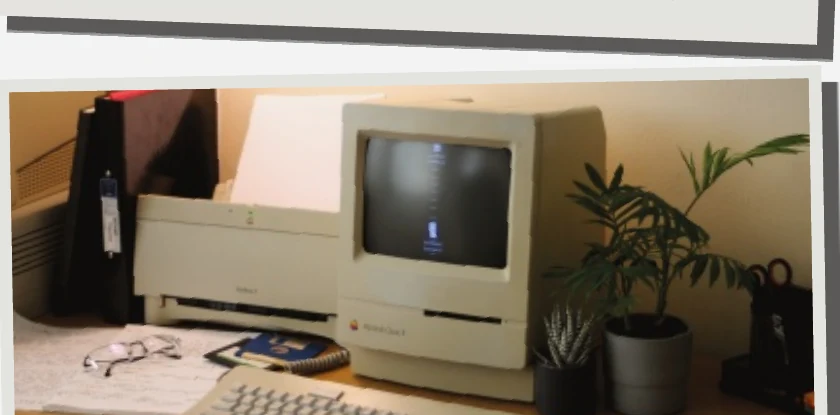
Apple had been cleaning up in Silicon Valley and beyond with its 'System' software. In contrast, the Bill Gates-led software behemoth had been treading water for a few years with Windows 3.1. In fact, System 7.5.2 was to be released on Macs everywhere just a month later. The battle of the operating systems was in full flow and you could probably argue it is still ongoing to this day.
I had no real clue of the itinerary, other than it seemed I was about to see everything Bill Gates' Microsoft had to offer in its battle with Steve Jobs and Apple - a battle that even Apple could not yet predict the magnitude of! From the off it was obvious they were out to impress - a limo at the airport directly to the five-star Four Seasons hotel, then out with ever-attentive PR people to amazing bars and restaurants on the harbour front at Elliot Bay.
Little did I know at that time Microsoft was firing shots at Apple. The Mac was established as the machine of choice for creatives. We had an office full of them back in the UK, putting all our monthly magazines together. Everything was done on the Apple machine. Nothing really happened on the PCs at that stage, apart from maybe a few popular DOS games of the time.
Of course, when you look back, the pressure on Microsoft must have been immense. Apple was enjoying success even though the Macintosh was seen as an overly expensive luxury for many. Even from beyond the grave after his untimely passing, Steve Jobs remains the poster boy of the Apple fraternity, but back in '95, he wasn't even at the company, having resigned some ten years earlier. He would be at NeXT for the next two years before making a triumphant return to the company he had helped set up when Apple completed its takeover and absorbed NeXT into the brand. Six months later, Jobs would be interim CEO, and the future of some of the most popular tech we use today would be shaped from that moment.
Bill Gates, on the other hand, was gearing up for a full-on assault on the home computer market. He knew that mainstream success would elude Microsoft until they could get an operating system out in the wild that anybody could use. DOS and its prompts had to be consigned to history, as the everyday computer user would never take to complex text string entry in the long run. Apple had shown the way with its user-friendly desktop environment controlled entirely with a mouse that just worked without complication. You turned a Macintosh on and it was reliable. You turned a PC on and hoped for the best. That trope is still with us today.
Microsoft needed to compete with that, and Windows 95 was to be Bill Gates' footsoldier.
Windows 3.1 had started the journey but in no way matched what Apple was doing. My own personal memory of Windows 3.1 was installing a modem into my PC, and a conflict would then occur if I plugged a mouse in at the same time. This would freeze the system, stopping me from getting a look at the early World Wide Web. I consigned it to the "it'll never catch on pile".
Windows 95 was set to change all that for the computing landscape and kick off a war. This war would be not only between the two companies, but also between Jobs and Gates themselves. Despite being the two most influential men in tech for the next decade, their relationship was a fractious one. While this sometimes leaned towards affection, at other times the infuriated rantings of two undoubted geniuses were allowed to come to the fore.
We are going to look at the two men and the environment that surrounded the battle between Apple and Microsoft from the middle of the 90s until Jobs' untimely death from pancreatic cancer in 2011. How could two giants of the industry ever truly get on in such a competitive environment?
Steve Jobs - The ultimate salesman?
"Of all the inventions of humans, the computer is going to rank near or at the top as history unfolds and we look back. It is the most awesome tool that we have ever invented. I feel incredibly lucky to be at exactly the right place in Silicon Valley, at exactly the right time, historically, where this invention has taken form."
The quote above comes from a little-known interview in 1995 at a similar time to when I was wandering around the Microsoft Campus in Seattle being wooed by the initial version of DirectX and what it would mean to PC gaming in the coming years.
Much gets made of Jobs' love/hate relationship with Gates but, in truth, he was a man who had stood up against what he perceived as stagnation in the industry he loved long before Microsoft versus Apple made a good story.
1987 would see a high-profile war of words with the CEO of Dell Computers, Michael Dell. Jobs accused the PC manufacturer of simply producing "unimaginative grey-boxes". Dell responded by saying if he was in charge of Apple "he would sell it and give it back to the shareholders."
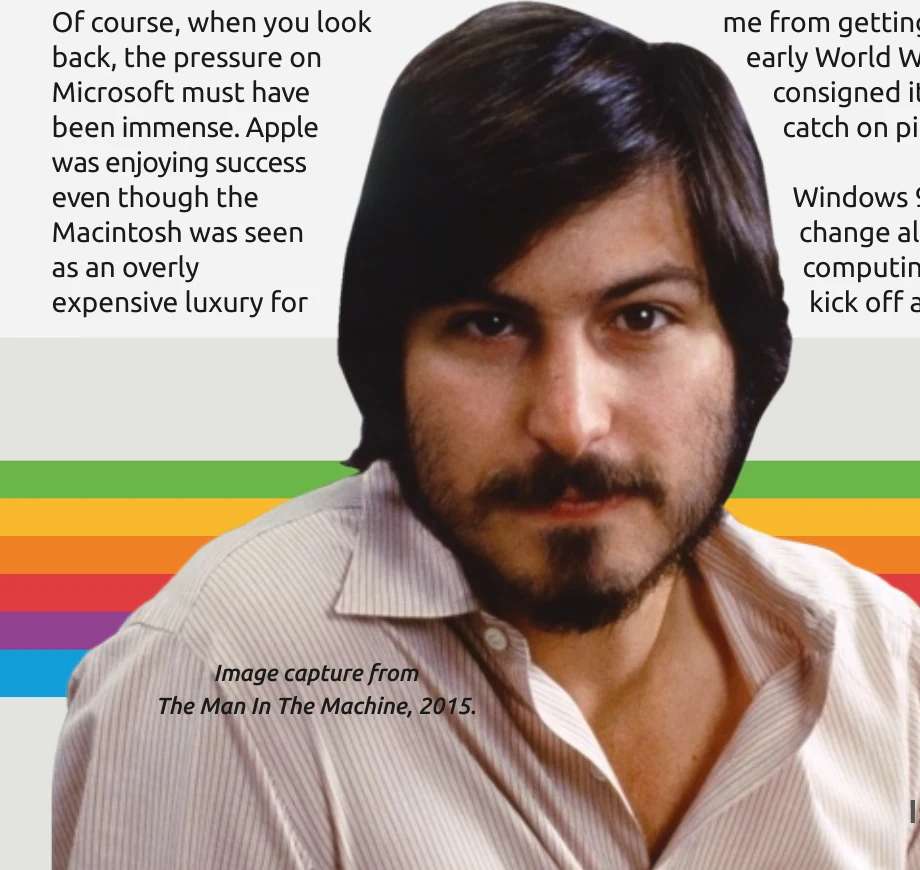
This kind of industry sparring is extremely similar to later comments about Bill Gates and Microsoft. It begins to make you think more about Jobs later in life and how everything he did was meticulously planned out with an end-purpose behind it. Was everything really a marketing line? Surely not?
His biographer, Walter Isaacson, said in an interview after Jobs' death that he had once made his advertising partner, Lee Clow, spend over half an hour deciding what shade of grey the signs for the restrooms in the Apple Stores should be.
Was this really ever a man who was prone to off-the-cuff comments about his chief rivals in the industry? Or were they, like much of everything else he did, driven home by the obsessive marketeer to help raise awareness of his own products at the expense of others? After all, pointing out how unimaginative competitive products are has been a staple of Apple's entire subliminal marketing strategy for many years since.
It seems as though it could have started as innocently as a throw-away remark about Dell's lack of imagination, many years before hardware such as the iMac revolutionised what we expect a computer to look like.
Is it unfair to characterise Steve Jobs as a walking marketing campaign from day one? His very ethos of "don't sell the product, sell the dream" came to the fore with Apple's 'Think Different' campaign - something so completely removed from what anyone else was doing to sell tech at the time, including Gates.
Inspired by the way Nike promoted its shoes by taking iconic athletes and associating its logo with them, rather than the more traditional route of "our trainers are better than Adidas", Jobs helped shape 'Think Different' - in part, surely another of those 'coincidental' slights on another tech giant - IBM, whose advertising campaign at the time was 'Think!'
Apple's 'Think Different' campaign ran for the five years between 1997 and 2002 and underlined that Jobs' arrival in Palo Alto was to change the landscape forever. Posters and magazine advertisements featuring iconic figures such as Frank Sinatra, Orson Welles, Jimi Hendrix and Albert Einstein portraits next to the Apple logo and the 'Think Different' helped to position the brand as desirable.
It was basically the same idea that Nike had a decade earlier but repackaged in such a way as to sell something completely different in a way we hadn't seen before.
Indeed Microsoft's Windows 95 campaign in the preceding couple of years couldn't have been much safer, choosing to focus on the new operating system's ability to multi-task and connect people easily. Some of the early Windows 95 ads could not be geekier and it was only with the addition of Start Me Up by the Rolling Stones as the soundtrack to its most popular commercial that Microsoft showed any intention to appeal to the masses and attempt to be 'cool' (the campaign cost $3 million to licence the music alone!) - the first time the Stones had allowed their music to be used in such a way.
In reality, though, the arrival of Windows 95 must have still irritated Jobs and driven him to continue his attack on what he saw as tired old ideas. A decade earlier Microsoft had unveiled the first version of Windows and Jobs had lost his temper completely with what he saw as a blatant rip-off of the Macintosh.
"They just ripped us off completely, because Gates has no shame," Jobs was quoted as saying, something that sounded considerably less than friendly banter.
Bill Gates, who never believed that Apple should have any exclusivity to a user interface that used graphics rather than lines of text, responded with: "If he believes that, he really has entered into one of his own reality distortion fields."
As young journalists back in the 90s it was probably less than obvious, even to those of us working in the industry, how heated things between the two could be at times. Everybody was aware that it was Apple vs Microsoft but most of the personal tensions between the two figureheads have tended to emerge in later years, even though when you look back it is now much more obvious.
It is only really with the benefit of hindsight, looking at Steve Jobs' character overall, as portrayed by history, that the picture begins to emerge of a serial assassin of his competitors. Whether this was how he truly saw them all, or simply how he wanted to position his companies across the other side of the chessboard, we will never truly know.
It does seem like more of a strategy when you realise there was rarely any competition that didn't feel the wrath of a barbed comment squarely aimed at a company's distinct lack of imagination when it came down to its products.
It wasn't just his industry enemies whom Jobs would test out due to a lack of imagination when it came to problem-solving. It's widely accepted that Jobs believed he could convince not only himself, but also anybody else, that the impossible was in fact very much possible. It just needed a mix of charm, marketing skill, hyperbole and persistence.
It was this facet of his personality that became known as the Steve Jobs Reality Distortion Field, which Bill Gates of course referenced in his quote above.
One of the most famous examples of this comes from biographer Walter Isaacson again. The story goes that during the Macintosh's development cycle in 1984, Jobs wanted to shave 10 seconds off the boot time of the computer. To attempt this he went to engineer Larry Kenyon with the request and was told flat out that it simply was not possible.
Jobs is said to have replied, "If it would save a person's life, could you find a way to shave 10 seconds off the boot time?" Kenyon, taken aback, said that he could in fact do that in such a life-threatening scenario.
Jobs seized on this and worked out on the office whiteboard that if five million Apple users all wasted an extra 10 seconds on booting their Macintosh that would be the equivalent of 100 lifetimes every year. Two weeks later Kenyon had reduced the boot-up time by almost 20 seconds.
Even if that story has turned into an exaggerated urban myth over time, it is still a cracker and an example of the almost cult-like adulation Jobs would come to receive from his army of Apple fans as the years progressed.
Bill Gates, however, was never one to admit falling under Steve Jobs' enchantment, once describing himself as immune to the Reality Distortion Field.
"I was like a minor wizard because he would be casting spells and I would see people mesmerized. But because I'm a minor wizard, the spells don't work on me."
Yup, he really did say that. Let that be an example of just how weird the relationship between Jobs and Gates could be.
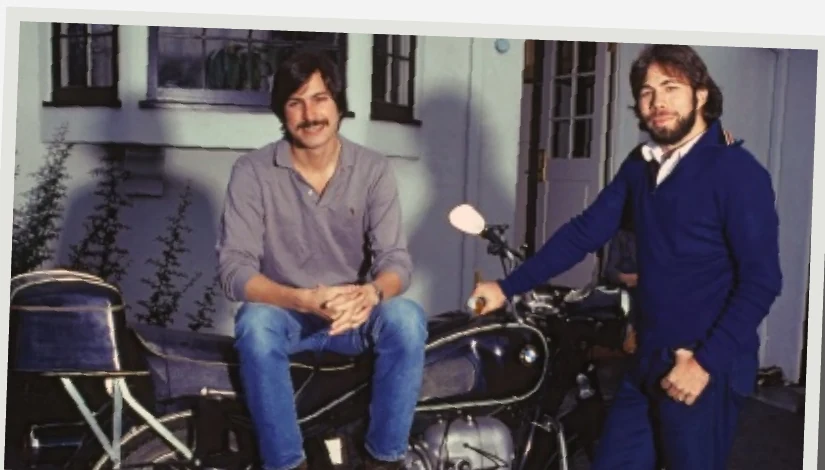
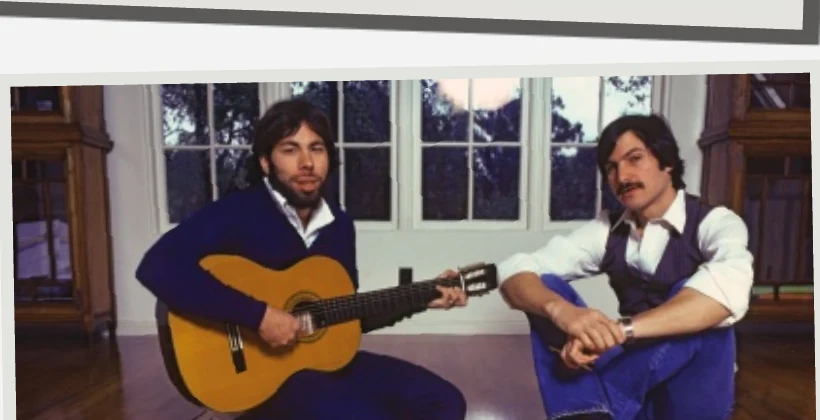
Bill Gates - Super nerd with a master plan?
For whatever reasons, a more extreme section of the global population has decided that Bill Gates is responsible for certain ridiculous crimes against humanity. But back then he certainly seemed a long way from being that all-powerful figure during the time when Jobs was casting his magic and minor-wizard Bill was rebuffing all his attempts.
As fractious and as complicated as their relationship could at times be, there was definitely a period where the two got on and could even be described as friends. This would be more so in the early days and became more difficult as time went on and the competition between the two companies increased, making it difficult for any friendship to fully flourish.
If you catch Gates in a reflective mood he will happily tell you: "We spurred each other on, even as competitors."
At other times, though, he is less flattering, at one point calling Jobs "weirdly flawed as a human being".
It's interesting to think how your viewpoint could waver so far between the two. It's almost like when you have two brothers who fundamentally are in each other's corners when it comes to the tough stuff, but there are enough things that irk them that occasionally it just boils to the surface.
What is true, though, is how fiercely competitive both men would be towards each other and the different ways it would manifest. It barely seems that either could make a step in their industry without the other popping up to comment on it.
Of course, the media didn't help here, with it becoming more apparent with each new step either company made that there was tension in the air between the two men. Manipulating this tension allowed the media of the time to get its views, in much the same way as a clickbait site operates today.
The same media often paints Bill Gates in a very different light to Steve Jobs, although both at times have been labelled anti-competitive. Gates was the nerd to Jobs' maverick. It soon became obvious that to take on Bill Gates and Microsoft you would have to operate in unconventional ways. This is where Jobs thrived.
People's memories of Gates in his early years almost exclusively highlight his competitiveness. One particular example from the early 80s recalls a time when an executive at Atari was showing Gates a new game on the Atari VCS and, while doing so, beat him 35 out of 38 times. Meeting up again just a month later, Gates won or tied every single game the pair played that day. He had gone away and studied the game, learned how it worked and perfected it. That was Bill Gates' ultra-competitive side showing itself early on in his career.
By that point, Gates was already being tagged as aloof and distant when it came to his management side. In the days long before mobile phones and the internet, he was notoriously difficult to get hold of, rarely returning important calls, which led to a degree of frustration in his own ranks.
Gates' business partner Paul Allen recalled that Bill was also prone to shouting episodes with his employees. It was a different time back then, but it is doubtful this style would carry as much weight in this day and age as it did in the 1980s.
Another tale that paints Bill Gates in a less than favourable light also involves Allen, who at the time was undergoing treatment for cancer. Allen insisted that Gates had reduced his share in Microsoft by issuing himself stock options while Allen was laid up. He described it as: "Scheming to rip me off. It was mercenary opportunism plain and simple." Gates would later go on to deny this and, despite claims such as this, Gates' stature continued to grow both in Silicon Valley and beyond.
Gates was Seattle's favourite son of the era, and in 1986 Microsoft moved onto the land which would eventually become its world-famous campus in Redmond, just 24km outside the city.
These days, of course, it is much larger, housing over 50,000 employees in the buildings that occupy the eight million square feet of land that it takes up, but back in the day it was a mere 30-acre site designed to take up to 800 workers.
Several expansions later it became clear that Microsoft was becoming essential to Seattle, employing a huge number of the population but also attracting new talent and ancillary business to the area.
It might not have had the geothermal heating wells and light rail system interconnecting the nearly 100 buildings that are planned by the end of 2023, but when Microsoft announced its intention to continue to contain most of its future growth to the Redmond area, there is little doubt Bill Gates was seen as much more than a local hero. He was almost a superhero in the area.
Gates' 66,000sq ft mansion began to emerge out of the ground in the Seattle suburb of Medina, overlooking Lake Washington in the 1990s. By then it was clear that not only were Gates and Microsoft at the top of the tree at the time Apple was struggling, but that it was laying down roots that would last well into the future in the Seattle area.
As an aside, these days Jeff Bezos also lives in the neighbourhood. Quite the neighbours to have if you ever need to knock on the door to borrow some sugar!
Returning to my trip in Seattle for a minute, Microsoft hired a luxury yacht to take our motley crew of UK journalists out onto Lake Washington for a clearly premeditated sail past Bill's house. At the time it wasn't complete but the enormity of the project and the wealth that Microsoft had afforded both he and his wife Melinda was beginning to show through. Remember, this was only really at the beginning of Microsoft's continued dominance of the operating system world. At this point in time, depending on how long you have been alive, you will remember that Windows could be a shockingly buggy mess. If you think we have it bad now, I will point you back to my Windows 3.1 issues of yesteryear.
Apple was struggling and Microsoft was flying, and this did not seem to be affected by stories of Gates shouting at staff or ripping off business partners. Maybe it was a sign of the times, but both Gates and Jobs, so clearly flawed in very different ways, sat on the cusp of driving forward the computer revolution and being largely, solely responsible for what we work on most of every day in one way or another.
The second phase - the battle for dominance
Approaching the 2000s, both Apple and Microsoft, still led by Jobs and Gates, were in strong positions. IBM had died away as a serious competitor and former foes like Dell had joined the Windows revolution.
Apple wasn't concerned. The game plan Steve Jobs had did not involve domination by enrolling the PC box builders into the Windows ecosystem. Microsoft could expand by becoming an integral part of other companies' technology, glueing it all together with the software that made everything possible.
Apple's strategy was obviously 'different' - there's that word again. Its corner of the market might be smaller but the margins were much higher. Making its own hardware reduced the reliance on the price of components the likes of Dell, Intel or AMD controlled. Apple could still take these components where it needed them and use them, but by putting them in its own machines and selling the complete package it could maintain a stranglehold on the retail price.
Of course, Apple needed to find a target consumer that perhaps didn't want something that anybody could have or even build for themselves. Apple wanted to provide a solution that wasn't aimed at an emerging games market or standard office workers, but rather the world's creative industry.
Designers, producers, musicians, artists. That was who the Macintosh and pretty much every Apple device apart from the iPhone, Apple Watch and AirPods has been aimed at since.
This was the brilliance of Steve Jobs. Taking something that you might even argue had much less flexibility and purpose than its competitor and making it desirable, almost because of that 'flaw'.
Jobs' one-time partner, the legendary Steve Wozniak, once said of the pair:
"The real differences between where Steve Jobs is portrayed compared to Bill Gates is Steve Jobs having a very futuristic forward vision. It was almost a bit of science fiction - 'Here's what life could be.' But Bill Gates had more of an execution ability to build the things that are needed now, to build a company now, make the profits now, in the short-term. I think that was the biggest difference between them."
Wozniak is credited as the guy who made Apple computers tick. Jobs was viewed as the man who wanted to make them look great in order to elevate them to a different market.
He continues:
"I think Steve Jobs actually felt that Bill Gates should be giving up the current [DOS environment] and really pushing the world toward the future of a mouse-based, point-and-click type of computer machinery and that Bill Gates was just in it more for the money. I mean the world market for computers grew ten times and Microsoft got it all."
Steve Jobs' derision for Microsoft Windows was not a closely guarded secret. He was once quoted as saying: "Of course, his (Bill Gates') fragmented model worked, but it didn't make really great products. It produced crappy products."
Even in 2006, when Jobs was already suffering from pancreatic cancer, his assessment of Gates was no less scathing: "Bill is basically unimaginative and has never invented anything, which is why I think he's more comfortable now in philanthropy than technology."
In many ways, while not couched in particularly endearing language, that could be one of the truest things Steve Jobs ever said about his long-term rival. Gates took the opportunity presented to him to build an empire at a time when the world needed such an empire.
Steve Jobs, even though he perhaps tried, never had the business acumen to take what he had at his feet and turn it into a global leader. He did however turn it into a global phenomenon. Perhaps he was more satisfied by that outcome than one that could have happened in an alternate universe, where he would jump into bed with the likes of Dell, possibly even Microsoft itself, to push Apple's operating system to the forefront of every home computer on the market at the time.
Were they ever friends?
This is the thing, while 'friends' would be stretching the mark a little too far, the two men, in between their barbed jousting, clearly had something more than mutual respect between them.
Gates once admitted on stage in 2007 four years before Jobs' untimely death at the age of 56 that, "I'd give a lot to have Steve's taste."
Jobs for his part occasionally showed at least some semblance of appreciation of what Gates achieved: "I admire him for the company he built - it's impressive - and I enjoyed working with him. He's bright and actually has a good sense of humour."
The first part of that sentence, taken in isolation, feels as though it is laced with hidden meaning. The second however is a rare glimpse into the idea that perhaps the pair of them actually must have enjoyed each other's company, and even the competition it brought along with it at various stages of their relationship.
When Steve Jobs eventually lost his battle with the pancreatic cancer that had plagued his final decade in October 2011, Gates was quoted as saying, "I respected Steve, we got to work together. We spurred each other on, even as competitors. None of [what he said] bothers me at all."
Obviously after somebody, even a rival, has passed away, you don't really want to be seen to be coming across as bitter. But between all the lines there was genuine and mutual respect between the pair for sure. It might not have always been at the surface and it was evident that it occasionally got lost during the bitter battle between the two companies. It was clear however that under the surface it was there, and that makes the relationship between the two even more intriguing.
It would have been fascinating to see how (and if) this relationship would have mellowed if Jobs had made it into old age. As it was, his ten-year fight with cancer must have taken so much out of him along the way. The original prognosis was a maximum of five years, but Jobs carried on and did some of his best work while knowing his demise was approaching, if not rapidly, certainly nearer than it should have been.
Steve Jobs was firmly set in his marketing ways. He wanted his products to change the world, even if that was just a trick of the marketing light. He believed that Apple was at the forefront of global change, whereas Microsoft merely wanted to appeal to the common denominator and take over the world.
In their own way, both men succeeded equally in what they set out to do. Gates has his operating system on the majority of computers in the world and Jobs has a certain little pocket computer called the iPhone in the back pockets and handbags of a huge proportion of the developed world.
Maybe without each other promoting and edging the other forwards, we wouldn't have the world full of technological marvels we have today.
Maybe we need Musk and Bezos to step up for the next generation.
Magazine coverstars
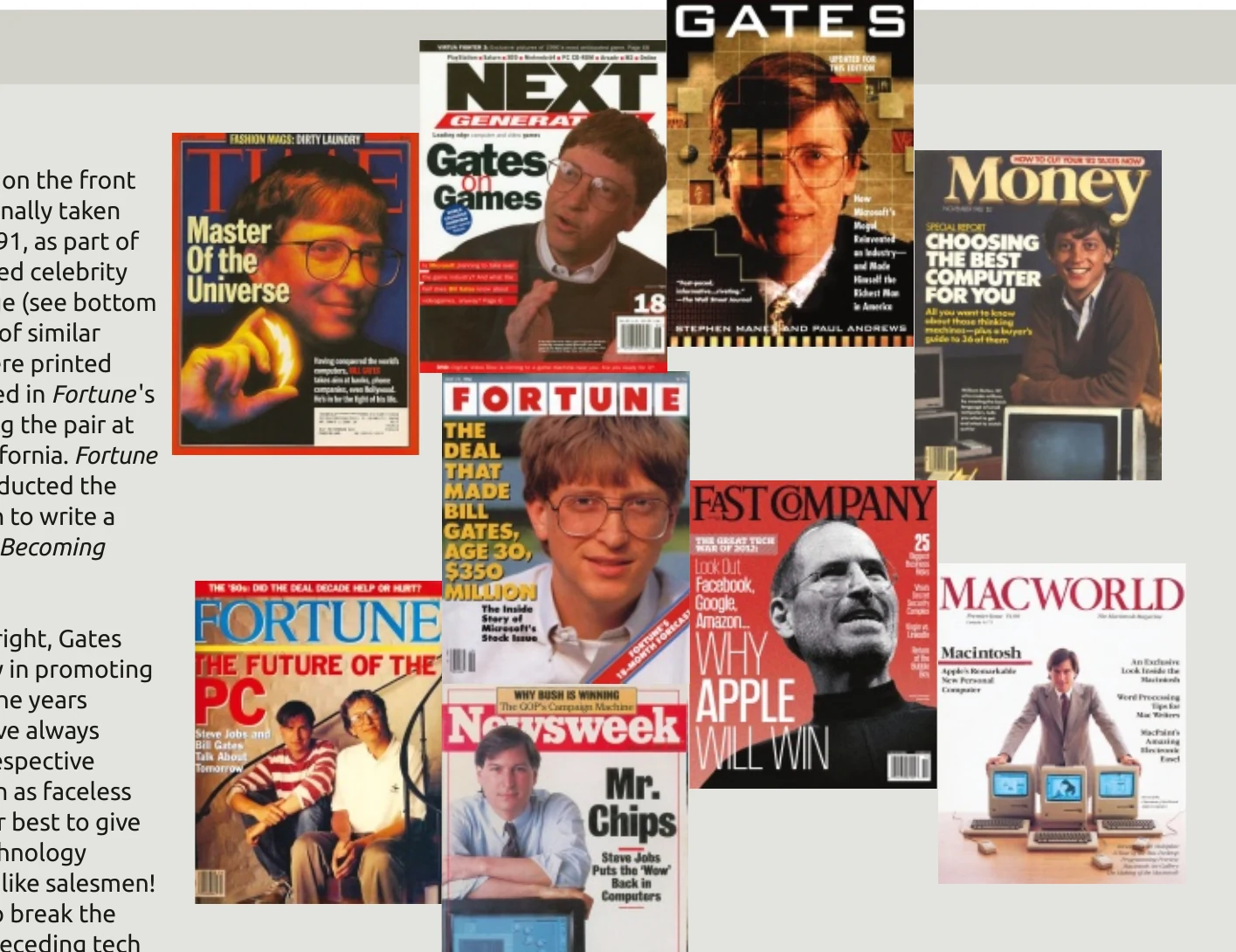
The legendary photograph on the front cover of this issue was originally taken for Fortune magazine in 1991, as part of a photoshoot by the talented celebrity photographer George Lange (see bottom left image below). A series of similar images of Bill and Steve were printed from the shoot, and included in Fortune's main feature story depicting the pair at Bill's home in Palo Alto, California. Fortune writer Brent Schlender conducted the interview - he later went on to write a biography of Jobs entitled Becoming Steve Jobs. As you can see over to the right, Gates and Jobs have not been shy in promoting Microsoft and Apple over the years through the press. They have always tried to ensure that their respective companies are not just seen as faceless corporations and tried their best to give a personal touch to the technology they've offered us - almost like salesmen! It's possible they wanted to break the public image mould that preceding tech giants such IBM and Xerox created.
Paul McNally is Managing Editor at BGFG, a new Manchester-based tech publishing house that recently secured multi-million investment. He currently edits WePC Gaming, the company's flagship website with over three million monthly readers.