Feature GamesHub
Why old computers and consoles go yellow, and why science tells us it’s not quite as simple as “the bromine did it”
Yellowed retro hardware is not simply dirty: UV, oxygen, heat, ABS chemistry and flame retardants all shape how old plastic ages, and why Retrobright is only a cosmetic answer.
Permanent archive copy
Originally published by GamesHub on 8 July 2026. Preserved here by the author for long-term access.
We’ve all done that thing where we have hipped an old console out of the loft, or even bought one on eBay (although we did recently warn you to be careful about that (opens in a new tab)) only to be confronted by a stained, yellow monstrosity that looks like it has spent most of itss life in a crack house. The yellowing of old computers and consoles is one of retro tech’s great shared curses.
Yesterday’s clean off-white plastic becomes today’s weird nicotine yellow.The weird thing is, sometimes one half of a console yellows while the other half stays almost perfect. Sometimes the keys are fine but the case looks like it was found in landfill. Sometimes the back is a nice cream color while the front is 100% Dijon mustard.
The common explanation online is usually simple: old plastic contains bromine, bromine reacts with UV light, and that is why your SNES now looks like old custard. That answer is in the ballpark for sure, but it is also not quite the whole story. The truth is more interesting,and much more useful if you are trying to understand whether yellowed plastic can be cleaned, restored, slowed down, or permanently fixed, or whether you should even bother.
Follow the yellow power brick road
Many yellowed retro machines are made from ABS plastic, short for acrylonitrile butadiene styrene. ABS is widely used because it is tough, cheap, mouldable, impact-resistant, and good-looking (well, for most of its expected lifespan at least). That made it perfect for consumer electronics: computer cases, console shells, monitor bezels, keyboards, printers, cartridge housings, and all the other beige wonders of the 1980s and 1990s.
ABS is a blend of different chemical building blocks, and the important one for our purposes here is butadiene. In ABS, the butadiene rubber phase gives the plastic toughness, but it also contains double bonds that are vulnerable to oxygen and UV light which are two components we have a lot of here on Earth. Nobody cared at the time. All of these electronics were built as throwaway.
Nobody thought back in the day that lunatics like you and me were going to still be playing on them, selling them, repairing them 40 years down the line, and trying to relieve simpler times in our slowly dying husks.
Research by cleverer people than me on ABS photo-oxidation has found that the butadiene phase is especially sensitive to UV exposure, producing chromophores, chemical structures that absorb visible light, and that yellowing increases as degradation progresses.
That word, chromophore is what we are particularly interested in here. A white or pale grey plastic looks that way because of how it reflects and absorbs light. Once ageing chemistry creates new molecular structures inside or near the surface of the plastic, those structures start absorbing different wavelengths. To your eyes, the result is yellow, brown, or tea-stained plastic. The plastic has not simply got dirty.
Its chemistry has changed.But it is also worth remembering that our eyes, which are pretty limited, only ever tell part of the story.
What is interesting is that pretty much every machine maker of the era – once Atari and Mattel has left the scene, apart from Sega, went for a plastic that had a grey or beige coloring. Was this fashion? Or cost, or both? Why was Sega the outlier with its black machines – at least until the Dreamcast joined the yellowing brigade?
Now, if you buy something off eBay that has aged in this way, washing will have very little effect. Don’t get me wrong, you absolutely should wash it. Pull it apart and get the case in the sink or under the shower, even the dishwasher because it will be full of somebody else’s muck, filth and skin cells. I opened up a Sega Multimega once after many years, and discovered it was a graveyard to about 10 wood lice. Yes, I’d wash it. Wash it all.
But when the ABS itself has yellowed, you are no longer dealing with filth sitting on top. You are dealing with chemical ageing in the material. ThreeBond, in a useful general explainer on plastic yellowing (opens in a new tab), separates the problem into surface dirt, changes in additives, and changes in the polymer itself. Once the polymer structure has changed, removing the yellow is much harder than simply scrubbing off old stains.
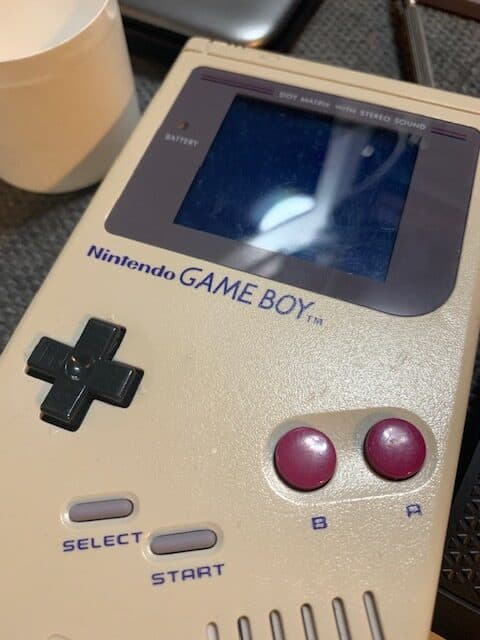
So where does bromine come in? Many older electronic cases used brominated flame retardants. This was not because manufacturers just fancied pouring something they had lying around into a giant vat. Consumer electronics contain heat, electricity, power supplies, transformers, voltage regulators, CRTs, and all sorts of things you would rather did not catch fire. Flame retardants were added to reduce flammability and help products meet safety requirements.
Decabromodiphenyl ether, or DecaBDE, is one example of a brominated flame retardant used in polymer systems including ABS, and it has been studied specifically for how it photodegrades under UV and visible radiation.
The problem is that “bromine causes yellowing” has become one of those retro scene explanations that is easy to repeat because it sounds right. Bromine has a brownish-red association in people’s heads, old consoles contain brominated compounds, old consoles go brownish-yellow. We have a motive, a weapon and a killer. Case closed officer. Except, not quite.
The better explanation is that yellowing is the result of several overlapping ageing processes. The ABS polymer itself can oxidise. Additives inside the plastic can change. Flame retardants may well photodegrade, while pigments and stabilisers can break down. Heat can accelerate reactions while UV light can kick them off. Oxygen keeps them going, just like it feeds a fire. The exact recipe used by the factory is key. The batch of plastic at the time has an effect.
The colourant plays its part and the individual pieces exposure history to UV and the elements in general all need to be factored in. This is why two machines from the same era can age differently, and why two halves of the same console can sometimes look like they came from different decades.
If you want the bloke down the car boot sale version: UV light and oxygen attack the vulnerable parts of ABS, especially the butadiene component, creating coloured degradation. Brominated flame retardants can be part of the mess, but they are not the entire explanation.
This can also help explain the classic “why is only part of my console yellow?” question.
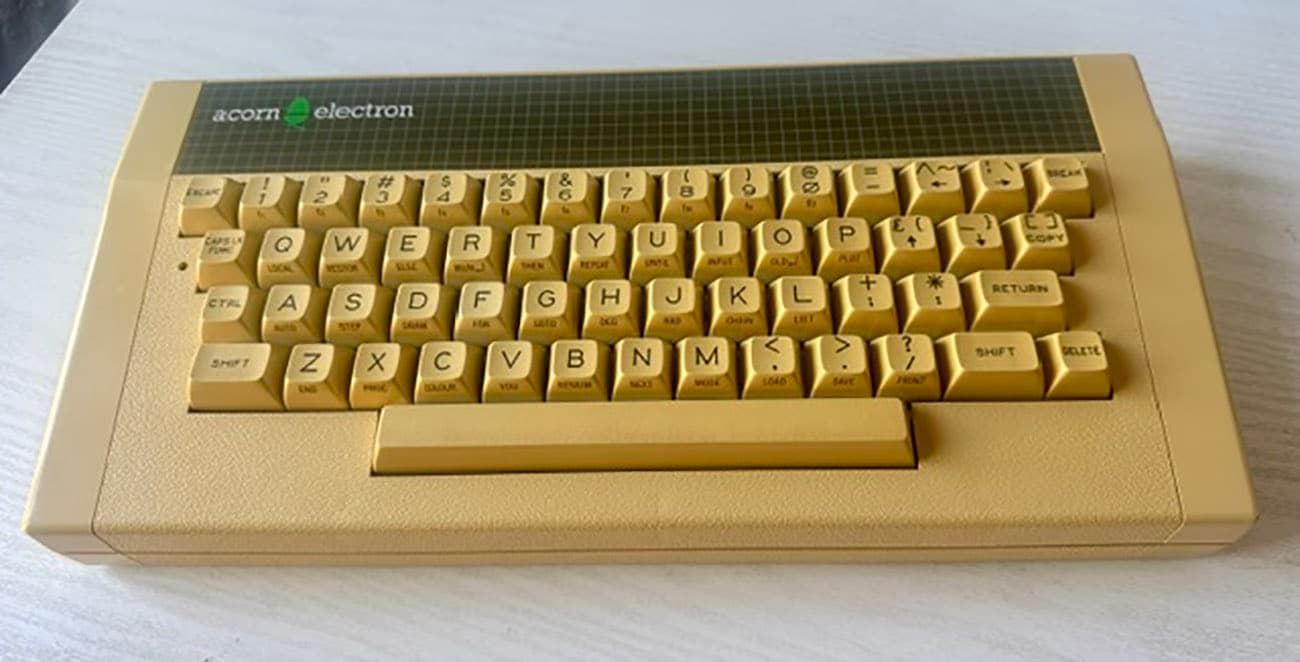
Was your Atari ST on a desk near the window? Maybe the backside of it was exposed to more sunlight. There’s no single answer, every yellowing machine is different. Even in that photograph of the Acorn Electron at the top of the page I just took for this feature, you can see how the light hits its yellowed surface more on the left side on the case.
One machine may have sat closer to a warm power supply. Here in the UK, the South is generally hotter than the North. Quite feasibly he upper and lower shells may even have been made from slightly different batches of plastic or different moulding runs at slightly different times. The SNES is famous for this, with some machines showing dramatic two-tone yellowing. That does not necessarily mean one half was cleaned and the other was not.
It may simply mean one piece of plastic had a different chemical DNA baked into it from the day it left its factory and this was its destiny. Interesting isn’t it?
Chemistry lesson
UV gets most of the blame because sunlight is the obvious villain – just look at what it does to your skin, but heat can accelerate oxidation and ageing even in machines stored away from direct light. Anyone who has opened an old computer will have seen how some areas near power supplies, vents, regulators, or CRT monitor heat sources age more aggressively. Heat gives chemical reactions more energy.
If oxygen is present and the plastic already contains vulnerable bonds, warmth helps time do its horrible little job.
Remember how in chemistry lessons at school that test tube full of, er stuff, was all normal, but when you applied a little heat from everybody’s favourite 80s classroom weapon, the Bunsen Burner, you got the chemical reaction. Mr Garner would be most pleased I am taking his mid-80s teachings to a brand new generation.
Then there is oxygen. You cannot really avoid it, which is for the best for our sakes. Plastic sitting in a cupboard is still surrounded by air. The reactions are slower without strong UV exposure, but they do not necessarily stop. That is one reason collectors sometimes find that a machine stored in a loft, garage, or spare room has yellowed even though it was not sitting in direct sunlight for years.
“Kept in the dark” is better than “left in a greenhouse,” obviously, but it is not the same as Han Solo in being defrosted in Return of the Jedi.
This is also why old plastic can become brittle. Yellowing is the visible symptom, not the disease itself. The underlying photo-oxidation and thermo-oxidation can damage polymer chains and change the mechanical properties of the material. The OpenMETU ABS study (opens in a new tab) linked yellowing with UV exposure and followed degradation through FTIR analysis, including increases associated with carbonyl groups in the ABS matrix.
Don’t read that back, let’s put it into plain English: the plastic is not just changing colour, it is chemically ageing. That does not mean every yellowed console is about to crumble in your hands, but it does mean the colour shift is a warning sign that the material is not what it was when new. We have probably all tried to unscrew something in a yellow case and the plastic pole has broken. Don’t worry, some hot glue will fix it. Good as new.
This brings us to Retrobright, (Retr0bright), peroxide whitening, salon cream, UV boxes, and the whole restoration rabbit hole. Search for “how to whiten yellowed plastic” and you will find thousands of guides recommending hydrogen peroxide, UV light, sunlight, heat, or various gel mixtures. The basic idea is that peroxide treatment can reduce the visible yellowing by altering the coloured compounds responsible for the discolouration. It can work. Sometimes it works spectacularly.
A console that looked like it had been buried in a skip can come out looking close to factory fresh. I used to Retrobright my consoles. Get out the peroxide and the murderer’s gloves and slather the Amiga in the white juice and then stick it in the sun for a few hours – although in the UK we often have to use UV lights in a box that makes it look like we are running an organised crime-led cannabis farm to the outside world.
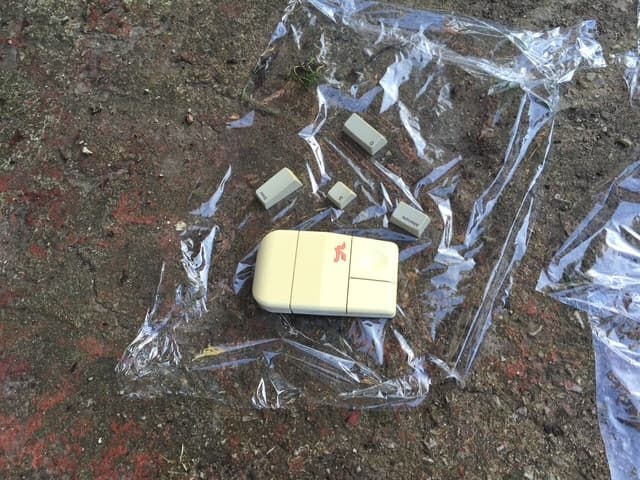
But Retrobright is not a time machine. It does not magically rebuild the original polymer. It does not put back every stabiliser that has been consumed. It does not reverse decades of material ageing in a neat, permanent way. It is better understood as a cosmetic chemical treatment: useful, satisfying and sometimes dramatic, but it is not risk-free and far from necessarily permanent.
Indeed the National Museum for Computing in the UK and Danish National Museum run campaigns to not Retrobright old hardware due to long-term concerns over plastic degradation. If they are like this now, wind forward another 40 years. We just don’t know what they will look like then at this stage.
Collectors have seen re-yellowing after treatment, even when machines are kept mostly away from direct sunlight. Classic-computers.org.nz (opens in a new tab) documented cases where Retr0bright-treated plastics began to yellow again over time, including machines stored in closed boxes or exposed only minimally to light. That does not mean Retrobright is a snake oil. It means the underlying plastic may still be chemically vulnerable.
The yellow appearance can be reduced, but the object has not become young again. Just like when my wife comes back after a round of Botox, we all know the truth deep down.
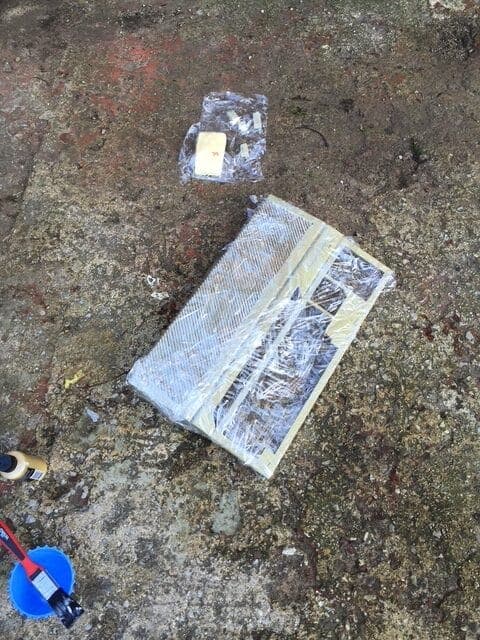
Peroxide disaster
There are also practical risks. Too much peroxide, too much heat, uneven gel application which is easier to do than not do, cling film wrinkles, strong sunlight, or careless timing can create blotchy plastic. Some restorers end up with marbling, streaking, chalkiness, or a weird over-whitened look. Coloured plastic can fade. Logos and printed markings can be damaged. Already brittle clips can snap during disassembly.
Anyone who has ever taken apart a yellowed 1990s machine knows of at least some of these terrors.
For valuable hardware, originality becomes a question as much as chemistry. Is a yellowed but untouched machine more desirable than a brightened one? It depends who you ask. Some collectors want museum honesty: the machine shows its age, and that is part of its history. Others want the thing to look as close as possible to the box art memory in their head. Both positions make sense. Personally, I think sympathetic restoration is fine, but aggressive whitening can push a machine into uncanny valley.
A slightly yellowed Dreamcast has character. A blotchy, overcooked one looks like a crime scene. My standpoint has changed over the years. I was fascinated by the chemistry, the restoring machines to their store bought looks. Now, older, and maybe a little wiser, I can appreciate the ravages of time a little more and the personality it gives these little, old beige boxes.
Modern plastics are not immune from these ravages of time, but manufacturers today have better stabilisers, different formulations and often more color choices. There is a reason so much modern gaming hardware is black, dark grey, painted, textured, or made from mixed materials. White plastic still looks beautiful when new, ask me why I bought white PC parts, but pale plastics will always make ageing more obvious than dark ones.
Black plastic degrades too; you just don’t see the colour shift in quite the same ugly way.
Retro computers and consoles were not made as heritage objects. They were mass-produced consumer goods built to hit a price point, pass safety tests, survive ordinary use, and then be thrown away and replaced with a new model. Nobody at Commodore, Sega, Nintendo, Amstrad, Atari, or IBM was worrying about how that plastic would look under LED lighting in 2060. The yellowing is a reminder that our digital past is physically unstable.
The chips may still work, the capacitors may be replaceable, the ROMs may be dumped, but the cases, the disks and the cassettes are being lost to time.
Retrobright can make an old machine look younger. Cleaning can remove the grime. Careful storage can slow the decay. But no method truly takes a 35-year-old console back to day one. The yellow is not just on the surface. It is the machine’s unique history, chemistry, and entropy, which is a grand way of saying your old SNES did not just get ugly. It just did science.